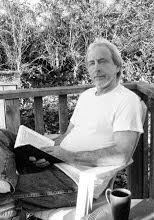
This is where my thoughts pool as a reservoir of miscellany and peculiarity. It's actually not my brain that's dripping -- it's my soul that's leaking.
It's really no big deal.
I've felt it wandering through the darkness between old memories and beneath maps
blown in from nights of endless dreams.
It's as elusive as the fragrances of colors.
I've almost seen it as a kind of palimpsest
on which time inscribes a baffling beauty.
It sometimes appears when I think of a place
that doesn't exist, where evening comes deeply and austere shadows are winged in by swallows. It's like the dim flowing of chemicals in poppies. I've almost known a word floating from trances, similar in valence to “significance.” It quivers
as a hesitant disclosure or like the fractal irises
of a strange curator's eyes. Something like hope is gathering quietly in the fantastical tangents.
When I listen to his works, a condition of reverence permeates my brain -- a spontaneous, natural hallowing of his memory. He conjured music of deathless beauty. His songs are exquisite spells of melancholy.
I think this book is a good thing, a well-written and thorough appreciation of the great song cycle Winterreise:
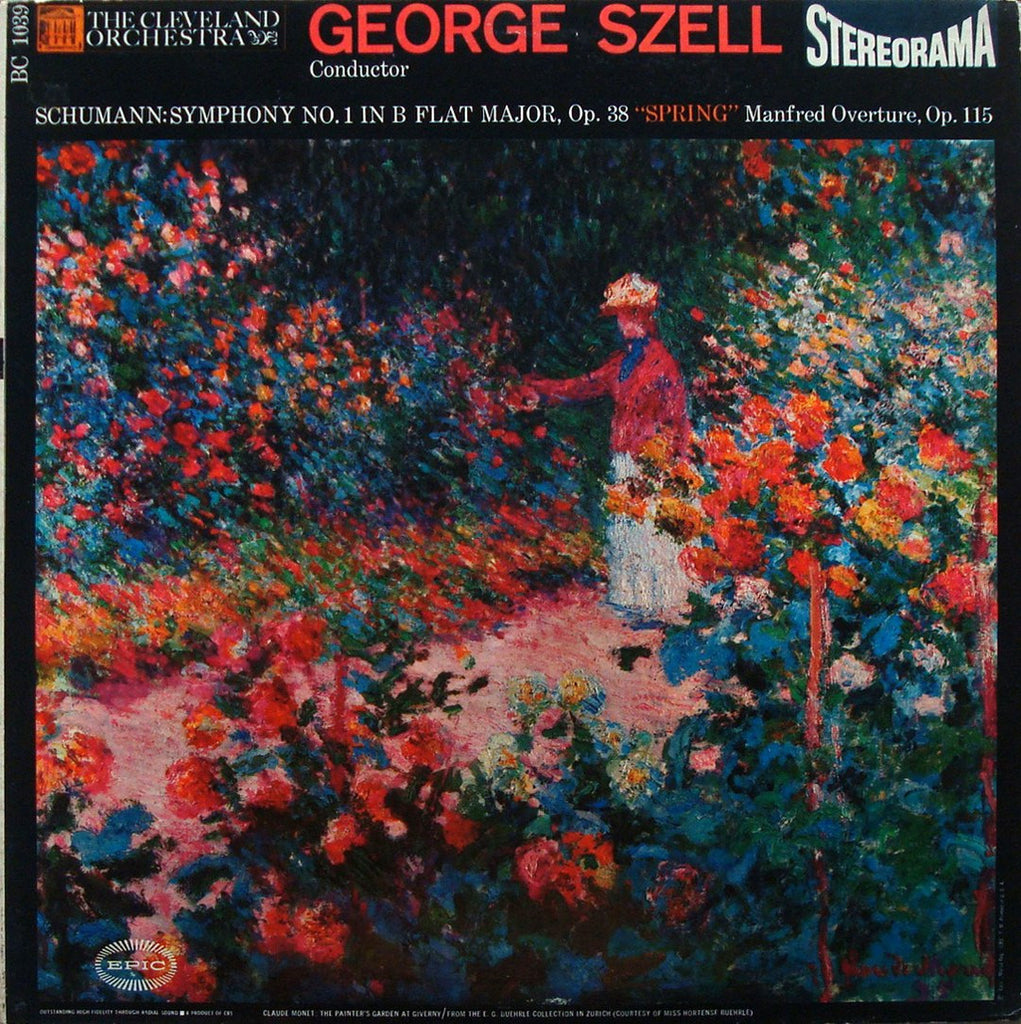
Robert Schumann's imagistic, programmatic ideas for his Symphony No. 1 in B-flat major, Op. 38 ("Spring") came to him only after the work was completed.
He suggests for the opening movement a longing for spring. Later in the symphony, a sense of things coming to life. Projected onto the last movement is a sort of in-the-moment melancholy that spring is passing too darn fast.
This is the first symphony I fell in love with. It happened around 1979. I still have this LP, recorded in 1958:
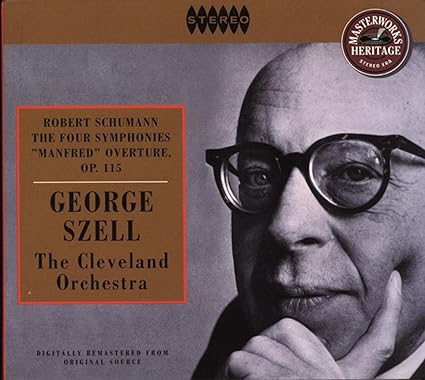
I bought the George Szell and Cleveland Orchestra CD of all the Schumann symphonies:
I've always had some trouble trying to apply Schumann's after-the-fact spring imagery to this work. Occasionally, I succeed in placing my imagination beside an imaginary winter fireplace -- longing for spring. Occasionally, I succeed in sensing a surge of growth, of vernal energy and bounteous bloom during later symphonic moments. But for the most part, I take in this work as an abstract musical wonder -- I'm stunned by and made captive to high-quality aural structures, oblique emotions, gestural spirits.
I've been a Doctor Strange fan since the Strange Tales comics of the 1960s. The artist Steve Ditko's pocket dimensions back then entranced me, suspended my teenage time, made me strange.
This movie is a quality envisioning, a marvelous homage:
A lot of folks would say that the music of Johannes Brahms is conservative, unadventurous, even formally claustrophobic. During his time, the musical radicals Liszt and Wagner were ascendant and excited the public. But I think the denser, plaintive textures of Brahms are more artistically intrepid and exhilarating than the chromaticism of Liszt and the hyperventilation of Wagner.
Brahms's adherence to certain formal constraints or models didn't prevent him from filling those composition spaces with stunning moments of melodic, harmonic, and rhythmic invention. When I say "invention" I mean something unique to Brahms: the coming-to-presence of unusually elevated spiritual substances. Brahms wasn't religious, so when I say "spiritual," I mean something more like "intensively artistic."
Even today -- Brahms. Artistic culture has sadly deteriorated, become facile, hectoring, and ironized nearly to death. And what passes nowadays for a musically thrilling creation, in whatever genre, faints into mediocrity and irrelevancy when set beside Brahms's "String Quartet in A minor, Op. 51 No. 2."
Here, Brahms goes deep, goes into abstract tissues of subtlest emotion and austerest beauty. What could be more thrilling than that?



![Doctor Strange [Blu-ray]](https://images-na.ssl-images-amazon.com/images/I/61HRk7rEWAL._SX342_.jpg)