Showing posts with label poetry. Show all posts

Thursday, March 2, 2017

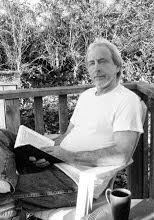
Poet Mike Finley -- boldly going where


I'm sort of addicted to the subtly beautiful and semi-mystical poems of Adam Zagajewski. Not all his poems delve into and create toward this effect. But those that do achieve their hold on me owing to his round-about, ostensible manner and quality of saying. Wrapped within that poetic quality is a persistent thematic pulse, which also attracts me. Beneath the banality, absurdity, and morbidity of existence teems another atmosphere of being that Zagajewski presents -- hope.

In my experience, Zagajewski's way toward the poetic and the mystical (are they not almost the same things?) is commendable. Most folks amenable to the poetic-mystical would, I think, appreciate Zagajewski's style and approach. But most folks -- including most readers of poems -- aren't interested in the strange and vague pulsing beneath the everyday. The notion that the world has somehow dreamed us from unknowable matrices of urge, change, music, heat, and psychism has little or no traction on the everyday mind.

So, anyway. Zagajewski pleases me because he has been touched by wonder and beauty, because he transforms the uncanny nature of experience into compact vessels of subtle words. The mystical is an after-tone or back-glow of experience in the foreground. It's an aura or residue. Time and substance are haunted. Apples in a cart on an old street seem to quietly gesture toward the ghostly miracles of ripening and presence.

Then there is another poet who doesn't deflect observations of beauty, wonder, and the mystic into a half-embarrassed, super-subtle reformatting of image and emphasis. He doesn't make those elements of being diffuse because of artistic "good taste." He confronts and presents those elements directly, as if an amateur prophet or unofficial priest.

This is remarkable and unsettling.

Mike Finley manages to directly say the strangeness, wonder, and significance of human being without being a pompous, tiresome jackass. Or without being a super-subtle Polish genius. Such a thing is almost impossible in poetry. Yet Finley, owing to some wakeful quality of spirit or visionary robustness -- pulls it off.

The radical mystic aspect of being that wafts through the ordinary, permeating experience with an implicit teleology activates his poem "Water Hills." First and final causes blend together paradoxically on the liquid horizon of inspired language. Finley doesn't mince words; he states the peculiar fact of the matter (actually, the rising and tides of matter itself). Yet those words vibrate toward us a fainter, unspoken suggestion concerning an invisible hope.

"Water Hills" is a kind of preachment, a heightened observance. The images are somehow documentary and metaphorical at the same time. More surprising, there's no weakening of intention or expression into irony. This is shocking. Nonetheless, we don't shriek and flee. We are, to the contrary, mesmerized during this poem. This is not usual. This is art.


Water Hills


Mike Finley abides in Saint Paul, Minnesota 


Sunday, February 5, 2017

Coming in April....!


Slight Exaggeration: An Essay
Adam Zagajewski

amazon.com


poet Jules Supervielle


1884 - 1960


Regretting the Earth

One day, we shall say: ‘That was the time of sunlight,
Remember how it illumined the slightest twig,
The old woman as brightly as the astonished girl,
How it gave a colour to things as soon as it fell,
Kept pace with the galloping horse; halted with him.
It was the unforgettable time when we were on Earth,
Where sound resulted if something was dropped,
We looked about with the eyes of connoisseurs,
Our ears comprehended every nuance of air
And when a friend’s footsteps approached we knew,
We gathered a flower or picked up a polished pebble.
That time when we could never take hold of smoke,
Ah! That’s all our hands know how to take hold of now.’

trans. A.S. Kline © 2011


Wednesday, February 1, 2017

Georg Trakl


One of life's frustrations has to do with the fact that only a smidgen of the contents of consciousness is available for divulging into the social sphere. The vast quantity of one's impressions and desired expressions remain folded within the spirit-spaces between neurons, into the marvels of dreams, onto the murky films of memory.

These private impressions are subtle to the point of being ineffable. We still talk a lot, but what we speak isn't about that internal haunting -- those states of time-as-mood and space-as-presence.

So sometimes we turn to profound, high-quality poems to grant a sense that elusive thoughts and feelings are not beyond the possibility of at least an indirect saying.

Poems can't articulate the subtlest residue of strange years and vague moments, but they can convey a general shared semblance of a deep divulging. Certain poems seem to speak toward the significant eeriness of embodied soul and the unsettling art of being.

When dark written visions are also somehow imbued with beauty, you know you're getting close to something.


I've added two books to my humble library:


amazon.com


amazon.comn


A third volume will be available in April:


amazon.com


Saturday, January 28, 2017

Unseen Pages


In the 1760s, a loose association of writers that might or might not have existed was scattered across Germany. From Baden to Bavaria, from the Black Forest to river cities, a diffuse band of eccentrics wrote treatises, stories, poems, and meditations. All of their inspirations had a center of gravity or allusive subtext concerned with the mystery of aesthetics and the eeriness of being. I’ll assume this shadowy group of writers did indeed exist. That way, I’ll be able to continue writing this essay.
The first stirrings of what would become known as German Romanticism were in the air — in the morning fogs drifting above rivers, through forests, around the forms of Gothic architecture.
The Society of Mutual Dreamers met twice a year – on the summer and winter solstices – at an undisclosed location. Karl Gottfried Fenstermacher (I’ll give him that name), who lived in the Black Forest, would bring to these gatherings the petals from a pale flower that grew in the shade of quietly troubled, darkly murmuring trees. During the secret meetings, attendees would partake of a liquid concoction distilled from those pale petals. They would collectively hallucinate into one another’s dreams and nightmares. They were determined, based on questionable hypotheses and principles, to derive or abstract a universal truth. They wished to touch the sleeping fabric of being, to examine its texture.
During these convergences into dreamland, they would compare impressions and mentally sketch stupefied rudiments for later pages. By such a collective oneiric experience, they hoped the sleeping spirit of the world might disclose a solution to the riddle of beauty and melancholy. These esoteric experiments, therefore, had a basis in Ästhetik und Weltschmerz, and were energized by the possibility of poetic transcendence. 
How is it that they could all appear in each dream simultaneously? No one knows.
Inspired by these sojourns into metaphysical regions, the members would return to their homes and write about imagination and abyss. They wrote pages that have never been recovered.
Friends, relatives, villagers, and city dwellers, who went about their conventional routines and thought their conventional thoughts, began to notice something odd about those dispersed members of The Society of Mutual Dreamers. At first, it was an aura of distractedness hovering around their personalities. It was as if, when spoken to, those literary eccentrics paid only half attention to what was being said.
Eventually, the situation became more dramatic, or perhaps tragic. The various odd ones began to appear anemic and pale. The collective condition worsened. As they became almost transparent, they were scolded and advised by their unknowing contemporaries to drink more red wine, to build the blood. Soon, none of them was ever seen or heard from again.
They had taken up permanent residence in the atmospheres of old dreams and evocative nightmares. While in those farther precincts, the members of The Society of Mutual Dreamers would convene seminars. They presented their morbidly ecstatic treatises, stories, poems, and meditations based on how it seemed to be in this tangent world. Those written works were very strange and very beautiful and very profound. They have also never been recovered in our waking world. But in the natural time of mornings and the quiet time of evenings, a gist of those unseen pages would occasionally sigh through trees, villages, and cities. How is that possible? No one knows.
One late afternoon, a young man – Georg Philipp Friedrich Freiherr von Hardenberg, also known as Novalis – was strolling through a grove of brooding trees in the Harz Mountains. That same pale flower also grew there. Novalis would kneel to breathe the fragrance of that flower, but it never occurred to him to render the petals into an occult liqueur. Nonetheless, he was now on his way to becoming odd. The wind picked up, and Novalis heard the ghosts of impressions from the lost Society of Mutual Dreamers. He heard and could almost read those lost pages drifting from the realm of great dreaming. About Novalis, Hermann Hesse would later allude to a new poetic dimension, to marvelous and mysterious work.
Some of Novalis’s pages have been seen:

“The more poetic, the more real.”


By Tim Buck

Wednesday, September 17, 2014

"Prairie Song" -- a poem by Julie Shavin


I keep listening to this.

Even though I'm an American, this thing affects me with a certain exoticism. It's quietly freaky and compelling, panoramic and metaphysical, moody and bizarre. I hope it also freaks out my foreign readers, who experience the haunted breeze of its old-west quintessence.

Besides all that, I think this is a well-crafted poem, an actual poem. Such things are rare these days.


Monday, April 28, 2014

Dark Imagining: The Ecstatic Poetry of Georg Trakl


What's a soul to do when confronted with poems that defy normality, that take you on excursions toward slant time and altered being? I suppose one option is to just be quiet, be content in those moments of aesthetic stupefaction. Or one can refuse silence, do what I'm doing now – try to say something about what's not really sayable.

I'll start by looking at a photo of the poet, as if some clue to the hidden spirits of language might be registered there.


1887 - 1914


It's probably wayward for me to say it, but I will anyway: the face of Georg Trakl is mad with hidden spirits of language. If I were told this picture had been taken inside a locked asylum for expressively coiled savants, I wouldn't be surprised. There's nothing of the poseur in his face. He looks genuinely odd, like the second cousin of some ancient Chaldean wheat god.

The finest poetry, apparently, has something to do with sort of looking, sort of being crazy. After seeing this photo of Trakl, I'm not sure I should expect much from poems not written by (or at least in the spirit of) old dead eccentrics.

Those old dead poets don't appear in their poems as regular-world subjects; rather, they are implicit shapes of wonder, vagabonds of heightened consciousness, doppelgänger mediums through and around which the ectoplasm of deep words comes to presence. Their images and metaphors are unavailable to regular-world poets. Things that are otherwise impossible happen in their poems.


In Hellbrun

Once more following the blue grief of the evening
Down the hill, to the springtime fishpond—
As if the shadows of those dead for a long time were
      hovering above,
The shadows of church dignitaries, of noble ladies—
Their flowers bloom so soon, the earnest violets
In the earth at evening, and the clear water washes
From the blue spring. The oaks turn green
In such a ghostly way over the forgotten footsteps
      of the dead
The golden clouds over the fishpond.


Most poems written today are lifeless things. How strange that certain poems by old dead poets are still so “ambulatory.” But maybe it's not so peculiar after all – those poems remain vivified owing to their dark spirit of creation, to their sense of world as mysterium, to their harrowing of vision into beauty. I think Georg Trakl and Novalis have something in common. Both considered reality large enough to contain itself and more than itself – the mythic, deathly sublime. 


Descent and Defeat
To Karl Borromaus Heinrich

Over the white fishpond
The wild birds have blown away.
An icy wind drifts from our stars at evening.

Over our graves
The broken forehead of the night is bending.
Under the oaks we veer in a silver skiff.

The white walls of the city are always giving off
           sound.
Under arching thorns
O my brother blind minute-hands we are climbing
           toward midnight.


I suspect that poetic art happens when experience is transformed by imagination, is saturated with ambivalence. Ecstatic melancholy is the distinctive aura of a true and lasting poem. Such poems are treasures that language bequeaths to itself from out of its own eerie matrix.


My Heart at Evening

Toward evening you hear the cry of the bats.
Two black horses bound in the pasture,
The red maple rustles,
The walker along the road sees ahead the small tavern.
Nuts and young wine taste delicious,
Delicious to stagger drunk into the darkening woods.
Village bells, painful to hear, echo through the black fir branches,
Dew forms on the face.


Experience for this poet in this poem is a composite texture or scheme of time. The perception of given phenomena has, through the dark prism of ecstatic emotion and morbid imagination, been refracted into a spectrum of hallucinatory images. In the throes of poetic trance, a paradox of profane spirit and sacred duration is somehow reconciled.

Beethoven's music happened in that un-repeatable moment when German Classicism and German Romanticism were sewn together in a unique fabric. The Apollonian and the Dionysian – reason and instinct – touched in the mind of Beethoven, and music reached its greatest happening. I have a strong hunch that something deep about consciousness as such and time as such occurs in Beethoven's profound spiritual music. In such fractal moments when sensibility is transformed by paradox and complexity, art realizes a rare potential.

Trakl's poetry happened in that un-repeatable moment when German Romanticism and German Expressionism came together in a tension of visionary forces. Other dynamics were afoot: Trakl's poems also lived in the fold of Symbolism and Surrealism. His consciousness inhabited an eccentric version of time, and written event took on a quality of ecstatic-pessimistic dream. Art realized another, different layer of mystical texture.

Like Beethoven's music, Trakl's poetry allows us a rare glimpse at how an artistic form of language seems to speak from its own riddling, occult depths. Experiencing Trakl is an aesthetic delirium of the finest vintage.


In Venice

Silence in the rented room. 
The candlestick flickers with silver light 
Before the singing breath 
Of the lonely man; 
Enchanted rosecloud.

Black swarms of flies 
Darken the stony space,
And the head of the man who has no home 
Is numb from the agony 
Of the golden day.

The motionless sea grows dark. 
Star and black voyages 
Vanished on the canal. 
Child, your sickly smile
Followed me softly in my sleep.


Poem translations by James Wright and Robert Bly


Sunday, April 6, 2014

Maudlin or infinite?


Like some paintings and some music, some poems are things of wonder -- dark-dazzling moments of written art. A strange thing can happen to time and space during a poem: regular time gets detoured into sideways dimensions; regular space becomes distended into eccentric volumes of mood that would startle even angels.

Though known for his plays, Tennessee Williams also wrote poems. One of his poems, about his mentally ill sister Rose, can detour and startle a reader of a certain disposition. Other readers will find it hackneyed, clanky, and maudlin. I'll admit that it required a second reading before the scales began to fall away from my eyes and I could see this poem, before I could begin to trace its unusual direction, take the measure of its volume.

The context is crucial. Williams's beloved sister Rose suffered from ever-increasing schizophrenia. Most of her life was spent institutionalized. At one point, she underwent a lobotomy in Knoxville, Tennessee. 


Valediction
She went with morning on her lips
down an inscrutable dark way
and we who witnessed her eclipse
have found no word to say. 

This poem is either maudlin or infinite, depending on how you read it, depending on whether or not you, as reader, are conventional or strange.  Think how the regular world flows, with its norms and pale distractions. Then consider those rare octaves of being that echo from a different, more eccentric key.

The South (Williams was born in Mississippi) retains an afterglow of the gothic. I will assume that penumbra was more pronounced in the first half of the last century than it is today.  Mental illness back then and there probably resonated with a more spiritual vibration than it would, say, in New York or even St. Louis.  If one wrote such a poem as "Valediction" in the context of New York or even St. Louis, such a poem would be aesthetic blasphemy, an irresponsible indulgent expression. But vibrating as it does with a Southern gothic, something else happens within aesthetic and expressive space -- the infinite stirs.

She went with morning on her lips

Not only with youth's bloom but with an unspoken redolence of quiet magnolias and a silent verse of early sunlight slanting its eternity.


down an inscrutable dark way

The loss of self as poignant as the amnesia of a lasting grave.


and we who witnessed her eclipse

The gothic observer of a spirit's collapse will never henceforth be normal.

have found no word to say

Sheer infinite significance trumps even gods and metaphors.


This little poem by Tennessee Williams opens up a spatial, existential abyss that swallows normality, convention, and our brusque, philistine hours. In their place is the possibility of art as our noblest shiver of wonder.


1911 - 1983


Friday, March 21, 2014

I'm not interested...


...in experimental and conceptual poetry. I'm not interested in any kind of self-conscious, "political"-Dada junk somehow construing itself as poetry. 

What a pretentious waste of time and energy. What a parade of theorizing pipsqueaks! Apparently, the phrase "real aesthetics" would send them into fits of indignant convulsion. Their stuff makes me tense and bored -- quite the odd combination.

I'm interested in luminous soul states, in melancholy symbol states that only a genuine artist can make happen on the page. I'm interested in the poems of Adam Zagajewski.


Unseen Hand: Poems
amazon.com


Monday, March 17, 2014

Adam Zagajewski, master poet


Yesterday, I posted a new poem of mine. I tried to put into words a general sense of things, how things look out there in the poignant circus of life. I suppose it was a kind of diffuse hymn to the great irony of being. 

Well, that sounds pretentious. And that's what happens to a poem not anchored to the weight of everyday experiences and given through palpable images. That's what happens to a poem not written by a real poet. You end up with a vague un-textured mood that makes a reader scratch his head: "What...?" The metaphysical has traction only according to its subtle supervention on the tangible.

Adam Zagajewski is a master poet. Sometimes, I wonder why so many people (especially me) still write poetry, when Zagajewski's poems make most other poems appear pale, self-indulgent, hectoring, tone deaf, amateurish, disposable. 

A real artist is so rare that we hoodwink ourselves into thinking mediocrity is somehow remarkable. A grading curve misdiagnosing quality. The mediocre should never be mistaken for the brilliant. 

I guess what I'm trying to say is that anyone who loves poetry should not hesitate to buy Zagajewski's books. His stuff is the real deal. In fact, his poems, like Beethoven's and Schubert's music, open up the ordinary onto textured dimensions of aesthetic experience. That's true brilliance. 

If my recommendation encourages a few people to buy his books, I will have accomplished something important, done my part to enhance the world.


Sunday, March 16, 2014

Someone please slap me...


...with enough force that I'm able to understand why this stuff is considered to be poetry:

"Five Poems from It's No Good"

(I'll let that book title go by without a snarky remark from me.)

In my un-slapped frame of mind, I wonder why this fellow -- Kiril Medvedev -- chooses to harm poetry with whatever it is he's doing. Why doesn't he instead blather and complain into regular paragraphs? Why is he breaking up prose into arbitrary lines?

Worse still, this fellow thinks poetry and politics go hand in hand. That's a form of artistic psychopathy. Or merely a spiritual coarseness on his part. Read and be abashed:

"New Emotion: On Kirill Medvedev"


Sorry, Mr. Medvedev. I have to call em like I see em.


Thursday, February 27, 2014

Poetry


One way of looking at it is to think there's a lot of poetry out there. Another way of looking at it is to think there's hardly any poetry out there.

For me, a poem is a thing with the artistic power to move a reader into another dimension. The reading soul is disoriented, rather amazed. An actual poem is open, strange, and timeless. A poem is profound, is spiritual, is as momentous in principle and in presence as Beethoven's music.  

Otherwise, it's just someone saying something -- blather, blather, blather.

When you find an actual poem, it will be a homecoming. The poet, from a shadowy matrix of haunted seasons, metaphysical events, and historical consciousness, returns reading souls to the bourne of symbols, to the region of early wonder. The poet is a subtle fantasist discovering textures of the uncanny and artistically layering them into an almost familiar substance. 

Otherwise, it's just someone saying something. Otherwise, it's not Adam Zagajewski or Ilya Kaminsky.

No one will agree with me about this, and that's okay. I realized some months back that my mind has become an alien eggplant darkly curving in an outskirt, outlaw garden.  


Tuesday, February 25, 2014

About a month ago...


...something came to me from who-knows-where-or-how. I had a little "vision" of a young Cesar Chavez. He was a teenager picking crops in some large California field. The fleeting image I had of him included his teenage consciousness. It was an outside picture and an inside picture. 

He would occasionally stand up and look out at the vast field. He would be thinking: "Every year, crops and these low wages, as if it's written forever into the roots of the world." He would sigh fatalistically as he stooped back down to continue picking. But in the back of his mind was the radical thought that maybe something could be different, that maybe people someday could be paid a human wage for their labor. The seed of an uncertain dream took on faint moisture and dim light in his young consciousness.

I wanted to write a poem about this. I can't because I'm not a good enough poet to write such a poem. (I had posted a new poem of mine a few days ago. I thought it was an okay poem. Last night, I realized it sucked so bad it could cause the formation of a black hole on Earth. I removed that poem.)

It occurs to me that I know someone who could write such a poem. All of the above radical stuff about workers' rights would have to be subtly cast, only ooze through the poem indirectly. Because politics ruins a poem, has no business elbowing itself into art. The poem would be less about a future UFW than about something metaphysical -- how the impossible might dream itself into possibility.

The poem would be mostly a series of images -- field, crop, sunlight, laborers (their clothes, expressions, postures, ironic asides). How could a poet write this poem about low wages in such a way that low wages aren't even mentioned? How could a poet make this poem in such a way that warm breeze on skin and complex smell of soil in the air come to written life? I don't know how.

Would it have to be a poet with Hispanic roots to write such a poem? Not necessarily. It would have to be a poet with imagination and nuanced talent. If such a poet happened to have Hispanic roots, then so much the better, I suppose.


I wish Lisa Alvarado would write my "Poem for Cesar Chavez."


1927 - 1993


Monday, February 24, 2014

The Dvořák Method


1841 - 1904


Czech composer Antonin Dvořák wrote music that can, I think, tell us something worthwhile about poetry.

Where is it written that poems must be depressing? Do poets think the word “serious” is automatically synonymous with the word “miserable” or the word “ugly” or the phrase “Life sucks”?  

Listen to Dvořák's Cello Concerto in B minor, Op. 104. The attitude of that glorious thing is noble and stoic. Listen to Dvořák's Slavonic Dances, Op. 46, especially No. 1 in C major. The attitude of that wonderful thing is sublimation of the tragic into gypsy whirl of “Life is better than not.”


*     *     *


This topic (this sermon directed at myself) makes me get all aphoristic:


Melancholy is the bronze tone of being, therefore a worthier pitch than the dissonant clang of despair.

Poetry is about aesthetics and deep symbolism, not mental and emotional disorders.

Poetry should be keyed to spectral octaves of the unconscious, not to barking noises of the ego. 

A poem not haunted with at least 100 years of world history is likely to be banal, is unlikely to be noble, stoic, and strange.

Music is the purest fantasy, and a poem should try to be its cousin – to write one's soul into the vast worlding dance of the unusual.


Saturday, February 8, 2014

empty zones


Poetry makes nothing happen.
~ W.H. Auden

That seems to say poetry is impractical, not utilitarian.  For sure, poetry with a political agenda is artistic waywardness. I think Auden's statement also says something else, and deeper.

From Joseph Brodsky's poem "New Life" comes this:

                                    Ultimately, one's unbound
           curiosity about these empty zones,
           about their objectless vistas,
           is what art seems to be all about. 


Poetry that brings neutral abyss to presence -- the great unanswerable question behind and allowing phenomena -- has an indelible aura of the artistic about it.  

Reading a poem that's not an implicit question toward the metaphysical ("curiosity about these empty zones") is like reading a bucket of rusty nails being shaken -- it grates on sensitive nerves. Even love poems can injure the reader's mind, when those love poems are unaware of "objectless vistas" as the backdrop for Eros.

In the depths of language, where artistic poets ponder and write, it's almost as if language is quizzing itself -- the status of its nouns, the time of its verbs, the drama of its syntax -- in order that an opening onto universal context might occur, zoneness per se. 

Some people who write poems declare stuff. But rhetoric evaporates poetic ectoplasm, leaving stanzas ghostless and brittle. Art doesn't like it when that happens. Art likes it when zones appear supple with time and ghosts, emptied out of neurosis and opinion. A painting by Yves Tanguy might clarify what I'm talking about. Tanguy isn't declaring or confessing in paint; he's making nothing happen


I Await You (1934)

Back to poetry.

In Brodsky's diptych "Venetian Stanzas," we find the poet moving through the difficult questions of a waterlogged and watermarked city.  

When I try to read these two poems with a focused attention, I get lost in Brodsky's figures of speech. I can't quite get or visualize what he's saying in particular. But when I read them in a half-focused state, letting the stanzas wash over me, I get a sense of them in general.

Behind and within Venice's material presence lurks a hollowness -- a volume of time haunting stone, fabric, people, everyday objects, and water. These stanzas pry open a melancholy space through which the poet ambles physically and spiritually. Into zones of decadent substance grieving the inscrutable weight of the word "is." A masquerade of exhausted history. Our poet is a medium translating the city's perplexed old moods into shapes of human irony. Structure as gesture of always facade, perception as zone of never knowing.

At night -- walls, windows, and the intrigue of rooms. In morning -- shadows just so beneath harbor sunlight and bird wing, the recoil of sentient flesh from the moisture of too much immanence. Venice and the poet both wearily cling to paradoxes of land and water, time and space, substance and being. Those paradoxes form into the empty zone of presence and a possibility of written art.

Eventually, the poet questions his own physical and metaphysical situation as such, honing in on its status of extraneity:


          I am writing these lines sitting outdoors, in winter,
          on a white iron chair, in my shirtsleeves, a little drunk;
          the lips move slowly enough to hinder
          the vowels of the mother tongue,
          and the coffee grows cold. And the blinding lagoon is lapping
          at the shore as the dim human pupil's bright penalty
          for its wish to arrest a landscape quite happy
          here without me.  


In Wallace Stevens's poem "The Idea of Order at Key West," we find the poet under a shore singer's spell of evocation, bringing to thought the "veritable ocean." The sea is a vast phenomenon of symbolic energies:

          The meaningless plungings of water and the wind, 
          Theatrical distances, bronze shadows heaped 
          On high horizons, mountainous atmospheres 
          Of sky and sea.  

But something else has washed into and fused with consciousness -- that song toward a vaster empty zone beyond. A vocalise of mysterious beauty. And from this comes awareness that the profoundest role of poet is to sound the uncanny question:   


                                      It was her voice that made 
          The sky acutest at its vanishing. 
          She measured to the hour its solitude. 
          She was the single artificer of the world 
          In which she sang. And when she sang, the sea, 
          Whatever self it had, became the self 
          That was her song, for she was the maker. Then we, 
          As we beheld her striding there alone, 
          Knew that there never was a world for her 
          Except the one she sang and, singing, made.


*    *    *

City and Sea as analogs to open abyss, empty zones filled with enigma and latent with death. 


Tuesday, February 4, 2014

a Wallace Stevens poem


To The Roaring Wind

What syllable are you seeking, 
Vocalissimus, 
In the distances of sleep? 
Speak it. 


Sunday, January 26, 2014

earliest post of the latest year


Artaud's Error


Antonin Artaud's “theater of cruelty” was more theory than theater, more influence than event. It involves the dismal notion that life and being operate according to principles of terror and agony. Behind the curtains of normality (forms of experience metabolized into culture) brood implacable energies that propel stuff through tortures of time, pathologies of space. Hence the new theater – spectacle as stimulation of and participation in brute awareness. Life and art in a frenzied marriage of anti-ecstasy. God not only dead but a dangerous psychopath.

Speaking of influence, Artaud wouldn't have had very much to get himself worked up about if not for Schopenhauer. I find it striking that Kant still reverberates into so-called philosophy – Continental directly, Analytical indirectly – while Schopenhauer's thought echoes through actual philosophy (music, literature, film, poetry – possible venues of extant wonder). So it seems fitting that Artaud would recast Schopenhauer into a form of art – theater. The problem is that both Schopenhauer and Artaud are wrong about aesthetics.

For Schopenhauer, the experience of art is for transient moments of equanimity – a calm distraction from the chronically blistering absurd of undifferentiated noumenal force (whether creator or auditor, a prophylactic zen trance). For Artaud, the experience of art is for mirroring the horror of the situation.

Neither approach to art is artistic. The former is about therapeutic coping, the latter agonistic mimesis.

Yes, life and being tend toward the sucking, stinking maws of pain and death. But human beings happen to be very strange creatures. We are potential transformers of the hopeless macabre into the unsettling beautiful. There is something mystic afoot that contradicts the rotting regions of despair and darkness. Where would we find the deepest impressions of this mystical afootedness? Let's go to Poland!

Frederick Chopin and Karol Szymanowski in music. Bruno Schulz in literature. Wojciech Has in film. Czesław Miłosz, Wisława Szymborska, and Adam Zagajewski in poetry. Why is Poland an incubator of aesthetic transformation? I really don't know. I live in Arkansas.

Chopin's music is pure sublimation. He inhaled the deathly, diseased hours after midnight and turned them into quietly ecstatic melodies, beatified the darkness into pensive waiting:


Szymanowski's own Song of the Night (Symphony No. 3) expresses mysterious fantasy rather than harrowing nausea from the netherfolds of consciousness: 


Schulz's story "Tailor's Dummies" from The Street of Crocodiles is an alchemical working of language and yesterday into an infinite mythology. Via hilarious melancholy and metaphysical stupefaction, the reader is made skeptical of a claim that the world is merely quotidian principles, merely cruel manifestations.


Has's film The Saragossa Manuscript -- a large tale of nested tales -- is also imbued with visionary humor. Life as curvaceous adventure:


Miłosz's poems question the environment of memory to the extent that loss itself is crowned with a halo of spiritual beauty:


Encounter

We were riding through frozen fields in a wagon at dawn.
A red wing rose in the darkness.

And suddenly a hare ran across the road.
One of us pointed to it with his hand.

That was long ago. Today neither of them is alive,
Not the hare, nor the man who made the gesture.

O my love, where are they, where are they going
The flash of a hand, streak of movement, rustle of pebbles.
I ask not out of sorrow, but in wonder.


Szymborska's poems explore the uncanniness of mere presence and the privilege of mere experience:


Miracle Fair

Commonplace miracle:
that so many commonplace miracles happen.

An ordinary miracle:
in the dead of night
the barking of invisible dogs.

One miracle out of many:
a small, airy cloud
yet it can block a large and heavy moon.

Several miracles in one:
an alder tree reflected in the water,
and that it's backwards left to right
and that it grows there, crown down
and never reaches the bottom,
even though the water is shallow.

An everyday miracle:
winds weak to moderate
turning gusty in storms.

First among equal miracles:
cows are cows.

Second to none:
just this orchard
from just that seed.

A miracle without a cape and top hat:
scattering white doves.

A miracle, for what else could you call it:
today the sun rose at three-fourteen
and will set at eight-o-one.

A miracle, less surprising than it should be:
even though the hand has fewer than six fingers,
it still has more than four.

A miracle, just take a look around:
the world is everywhere.

An additional miracle, as everything is additional:
the unthinkable
is thinkable.


Zagajewski's poems are like no other poems being written these days. They are jaw dropping in their subtle spiritization and aesthetization of time and being. This from his book Unseen Hand: Poems:


Improvisation 

You must take up the world’s whole weight 
and make it easier to bear.
Toss it like a knapsack
on your shoulders and set out.
The best time is evening, in spring, when
trees breathe calmly and the night promises
to be fine, elm twigs crackle in the garden.
The whole weight? Blood and ugliness? Can’t be done.
A trace of bitterness will linger on your lips,
and the contagious despair of the old woman
you spotted in the tram.
Why lie? After all rapture
exists only in imagination and leaves quickly.
Improvisation – always just improvisation,
great or small, that’s all we know,
in music, as a jazz trumpet weeps happily
or when you stare at the blank page
or try to outwit 
sorrow by opening a favorite book of poems;
just then the phone usually rings, 
someone asking, would you like to try
the latest model? No thank you.
I prefer the proven brands.
Grayness and monotony remain; grief
the finest elegy can’t heal.
But perhaps there are things hidden from us,
in which sorrow and enthusiasm mix
non-stop, on a daily basis, like the dawn’s birth
above the seashore, no, wait,
like the laughter of those little altar boys
in white vestments, on the corner of St. John and Mark,
remember?


What's disheartening is that today you find music, literature, film, and poetry still under the conscious or unwitting influence of Artaud. Consciousness is considered a curse, life a toxic extract, abjectness the persistent cool. Today, you find music as aggression, literature as smirkingness, film as violence, poetry as abyssal complaint. What's so silly about all this “profound” artistic misery is that it preens with such egoistic gusto. Apparently, you can become famous if your avant-gardism is rebellious, doomy, and pretentious enough. There's something out of kilter about that.

If the world is a cruel and reckless berserking, then it's best not to dwell on that stuff. Better to sublimate and reconfigure. Better to transform our dystopian tears into aesthetic substance. Real art lives and breathes in the quizzical region, in moments that modify the actual into a symbolic otherness – space and time become perplexed rhapsody. Frowning while holding up a theatrical mirror to the vicissitudes of chemical and organic immanence is anti-art; actual art is a gesture toward paradox and transcendence.

Artaud presumed to impose his view of a nihilistic reality on the audience via scene and sound. To shake people awake. That's megolomania and guruism rather than art. Real art suggests and is uncertain. Real art is a transmutation of dark materials into evocative shadows, into substrates of possible light.  


1896 - 1948