Showing posts with label music. Show all posts

Sunday, March 26, 2017

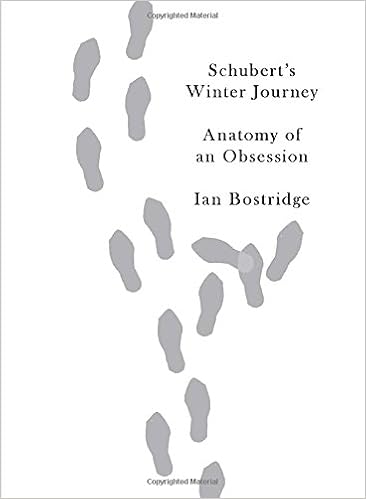
a meditation on Schubert's WINTERREISE


Franz Schubert died at the age of 31.

When I listen to his works, a condition of reverence permeates my brain -- a spontaneous, natural hallowing of his memory. He conjured music of deathless beauty. His songs are exquisite spells of melancholy.

I think this book is a good thing, a well-written and thorough appreciation of the great song cycle Winterreise:


amazon.com


Saturday, March 25, 2017

Schumann's SPRING


Robert Schumann's imagistic, programmatic ideas for his Symphony No. 1 in B-flat major, Op. 38 ("Spring") came to him only after the work was completed.

He suggests for the opening movement a longing for spring. Later in the symphony, a sense of things coming to life. Projected onto the last movement is a sort of in-the-moment melancholy that spring is passing too darn fast.

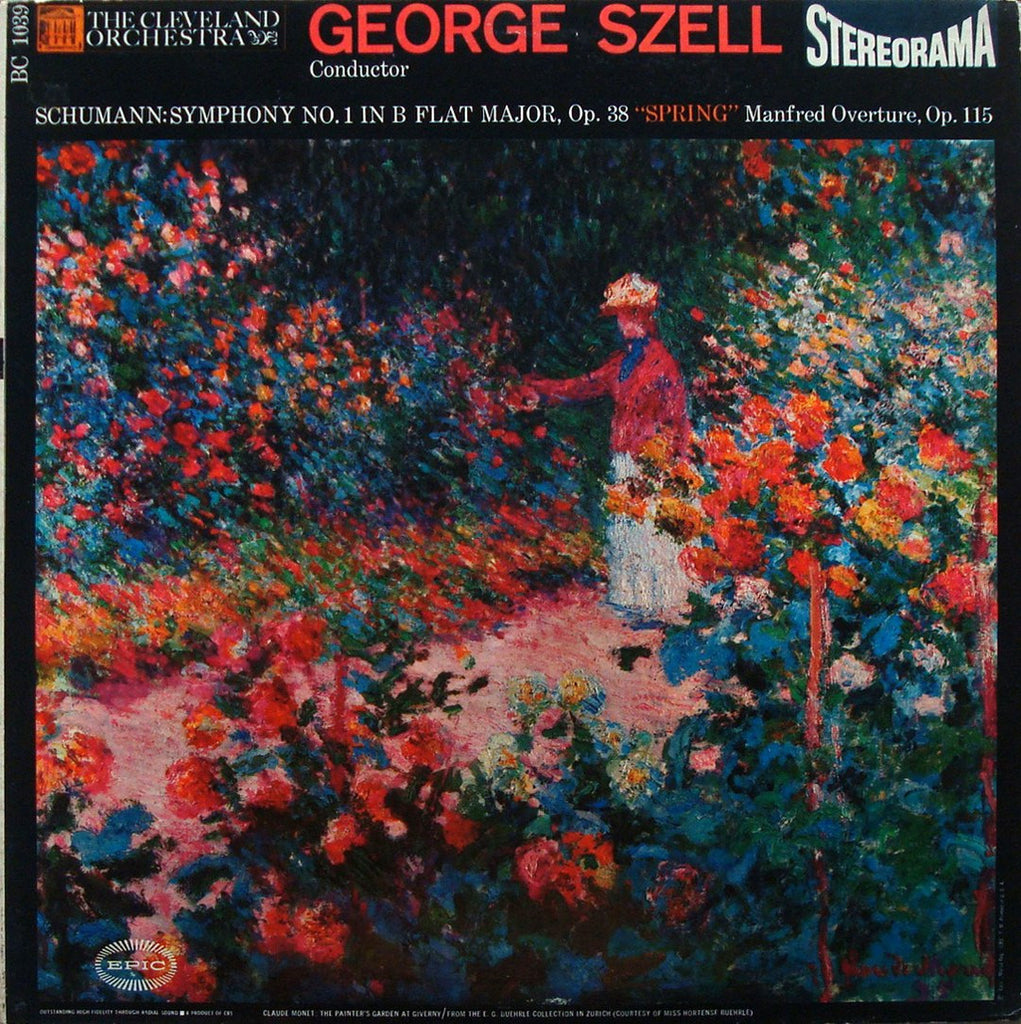
This is the first symphony I fell in love with. It happened around 1979. I still have this LP, recorded in 1958:

LP - Szell: Schumann Symphony No. 1 "Spring" + "Manfred" Overture - Epic BC 1039


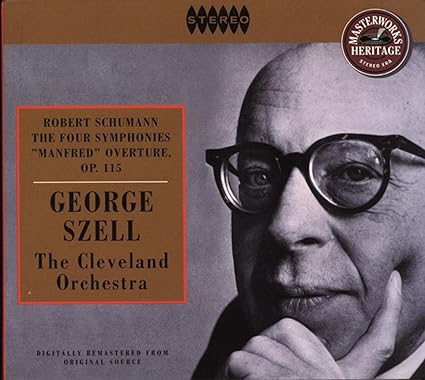
I bought the George Szell and Cleveland Orchestra CD of all the Schumann symphonies:

Schumann: The Four Symphonies; Manfred Overture
amazon.com

I've always had some trouble trying to apply Schumann's after-the-fact spring imagery to this work. Occasionally, I succeed in placing my imagination beside an imaginary winter fireplace -- longing for spring. Occasionally, I succeed in sensing a surge of growth, of vernal energy and bounteous bloom during later symphonic moments. But for the most part, I take in this work as an abstract musical wonder -- I'm stunned by and made captive to high-quality aural structures, oblique emotions, gestural spirits.


Monday, March 6, 2017

a thrilling thing


A lot of folks would say that the music of Johannes Brahms is conservative, unadventurous, even formally claustrophobic. During his time, the musical radicals Liszt and Wagner were ascendant and excited the public. But I think the denser, plaintive textures of Brahms are more artistically intrepid and exhilarating than the chromaticism of Liszt and the hyperventilation of Wagner.

Brahms's adherence to certain formal constraints or models didn't prevent him from filling those composition spaces with stunning moments of melodic, harmonic, and rhythmic invention. When I say "invention" I mean something unique to Brahms: the coming-to-presence of unusually elevated spiritual substances. Brahms wasn't religious, so when I say "spiritual," I mean something more like "intensively artistic."

Even today -- Brahms. Artistic culture has sadly deteriorated, become facile, hectoring, and ironized nearly to death. And what passes nowadays for a musically thrilling creation, in whatever genre, faints into mediocrity and irrelevancy when set beside Brahms's "String Quartet in A minor, Op. 51 No. 2."

Here, Brahms goes deep, goes into abstract tissues of subtlest emotion and austerest beauty. What could be more thrilling than that?


Friday, March 3, 2017

perfection happens


Not often. When it does in musical creation, is there a basic principle at work or in play that can be fetched by intuition, proposed by the listening, floating brain?

How about inevitability?

Chopin's "Nocturne in C-sharp minor, Op. 27, No. 1" flows and develops with an organic, unifying complexity of formal elements. Color and rhythm, line and structure, contrast and rhetoric. Also spiritual components -- disquiet and beauty, dream and melancholy, regret and candlelight. These aspects taken together build up a dynamical, living momentum, startling the ear and soul with a sense of ordained emergence, of aural fate.

The effect is like listening to music spontaneously write itself. The artistic logic unspools as if according to a graceful algorithmic compulsion. What we hear could not be otherwise. This night piece defies the natural and usual law of contingency. The fact that it exists is as necessary as time and gravity.

Is paradox also part of perfection? As this nocturne enters and interrogates the evening, a sense of improvisation blends into the destiny of the flowing equation.


Wednesday, February 8, 2017

Schubert's last three piano sonatas


Which CD set?

That's the question. One must decide or be trapped within a spectrum of faltering discernment, leading eventually to soul-darkening monomania.

Alfred Brendel, Radu Lupu, or Paul Lewis?


amazon.com


amazon.com


amazon.com


Overall impressions:

Brendel -- magisterial, immersive, architectural   
Lupu -- sensitive, poetic, intensive
Lewis -- beautiful, holographic, powerful 

Recorded in 2002 and 2013, Lewis's set benefits from up-to-date engineering -- the clarity is marvelous to behold. Brendel's set was recorded in 1972 and 1975. Lupu's in 1971, 1982, and 1994. But although quality of recorded sound is important, my emphasis here is on interpretive artistry.

In the Sonata in C minor, D. 958, Brendel somehow knows -- spiritually as it were -- when not to pedal. Those rare and ineffable moments are decisive musical effects. In addition, the listener senses that he or she is in the presence of an ineluctable, masterful conception. His is the best version.

In the Sonata in A major, D. 959, Lupu brings this score to aesthetic life as an aural morphing of sunny Viennese moods into a darker rhapsody. Normality, melancholy, and ecstasy blend into an unsettling triplex of intuited Schubertian consciousness. Lupu understands. His is the best version.

In the Sonata in B flat, D. 960, Lewis barely edges out the Romanian. Brendel's version strikes me as more dutiful than profound. Lupu impressively conveys this as a slow-building danse macabre but misses a certain required pulse of deep metaphysical seriousness. Lewis projects this last great sonata as a waking dream, both tragic and cathartic. In the two previous compositions, his beauty, holography, and power are overwhelming. Here, he applies the perfect restraint, bringing those inherent stylistic qualities under control, to proper scale. Schubert's spiritual imagination and precluded time are uncovered and allowed to glow. His is the best version.

Each artist claims one of the sonatas, in my estimation. So what's a soul to do now? If you've got the money, spring for all three sets. Schubert's late piano music is that important. If you can only afford one, I recommend Paul Lewis's set. Why? Because he comes up short by the merest of degrees on D. 958 and D. 959. As mentioned, he's perhaps too beautiful, too holographic, too powerful in those two sonatas.


Friday, February 3, 2017

Violinist Alina Ibragimova


Heiftez, Milstein, Oistrakh -- the finest violinists of the twentieth century in my opinion. Of course, my opinion is based on certain aspects of my being. Other great violinists of the twentieth century don't find their aesthetic way into the peculiar structure of my consciousness.

Now there is a new grandmaster of the violin, the finest of the twenty-first century.

Born in Russia in 1985 and now living in England, Alina Ibragimova is a supreme musician. More than technical brilliance, she brings to the Beethoven sonatas below an elevated spiritual artistry. It's that rare kind of artistry coming to presence without being compromised by ego. (Heiftez played egotistically; Oistrakh exuded cultural egoism; Milstein was commendably self-effacing.)

Ibragimova's playing manifests as pure musical expression, as if the score were somehow magically playing itself. The violin here is so...Beethovian.

But speaking of technical brilliance, I've never heard this kind of perfection before in a violinist. Her beautiful tonal production captivates melodically and dazzles rhythmically (that unblemished punctuation of strong double-stops!). I've never heard such natural and confident playing.  

The accompanist Cédric Tiberghien is no slouch either.


amazon.com


amazon.com


amazon.com


Her Prokofiev CD is also worthwhile.


amazon.com


Her home page -- alinaibragimova.com


Monday, January 30, 2017

Finally, a Russian!


I've been searching a long time for a true Russian to play Rachmaninoff's "Prelude No. 5 in G minor, Op. 23."

The best I had come up with, until now, was Sviatoslav Richter's version. It's almost perfect.


Today, I found perfection. Boris Beresovky.


Why is this the case?

His tempo is slow enough for the creation of sufficient spiritual energy to gather around the written music. And during this gathering, old Slavic ambiances are drawn into the inexorable swirl. This fellow digs down into the vodka-hued substance.

When the tempo is too fast, cultural inflection and archetypal rhythm aren't allowed to emerge from the score. It's a waste of time listening to this -- my favorite prelude -- when it's played too swiftly, played by those who either hector or are indifferent to the Russian musical spirits. This composition must be played with a breathed poise and a cultural sensitivity. Otherwise, its peculiar blend of polka and gravitas -- as if emblematic of a bronze horse's statuesque strutting -- will be missed.


I don't know anything about this pianist, other than what his prelude performance reveals -- a Slavic character and an artistic imagination. For all I know, everything else he has recorded sucks. I tend to doubt it, though.


Apparently, the CD is unavailable from primary sources but can be ordered from Amazon's associated sellers:


Thursday, January 12, 2017

Violinist Carolin Widmann


I have two CDs by her -- Robert Schumann's violin sonatas; three violin and piano works by Franz Schubert. Both of those were revelations for me. Having heard and appreciated these works by others, I was surprised to discover how much artistic, musical possibility was still latent in them. Widmann's versions are astonishing.

I'm looking forward to her newest CD -- concertos by Mendelssohn and Schumann.


Saturday, September 27, 2014

Samuel Barber's Piano Sonata


John Browning's legendary recording


Monday, September 15, 2014

Beckett & Feldman -- NEITHER


Composer Morton Feldman requested from Samuel Beckett an original text as libretto for an opera (or anti-opera, or monodrama). Beckett sent him 87 words in a text titled Neither. The work, for soprano and orchestra, was completed in 1977.


Neither

to and fro in shadow from inner to outer shadow
--
from impenetrable self to impenetrable unself by way of neither
--
as between two lit refuges whose doors once neared gently close, once away turned from gently part again
--
beckoned back and forth and turned away
--
heedless of the way, intent on the one gleam or the other
--
unheard footfalls only sound
--
till at last halt for good, absent for good from self and other
--
then no sound
--
then gently light unfading on that unheeded neither
--
unspeakable home


Wednesday, August 13, 2014

sorry for being silent


A blog is for saying stuff. Silence is weird.

I thank those who still stop by here to flip through the archives.

I'm in week three of recovery from open heart bypass surgery.

I ain't got much to say. I'll post some music instead.


Tuesday, April 29, 2014

Monday, April 7, 2014

Bartók -- Concerto for Orchestra


It occurs to me that I run the risk of being depressed today if I don't listen to this:


Friday, March 21, 2014

Meet Me in the Alleyway


This song makes me happy. It reminds me of how weird it is in the deep South.

I grew up a few miles north of Louisiana. Some of those Louisiana vibes made their way into my hometown:

hysterical night women, flaming death at the refinery, back road haints, toxic creeks, baptisms everywhere.


Meet Me in the Alleyway
Steve Earle

I had a melancholy malady
Went to see the doctor and the doctor say
Too bad, nothin' he could do
He knew a man in Louisiana if I’m willin' to pay
Laid my money on the barrelhead
Man behind the bar began to shimmy and shake
Can't lie, I reckoned I was dead
When he picked my money up and I heard him say

Meet me in the alleyway minute to midnight
Don't be late meet me in the alleyway
Better come runnin' the spirits won't wait

Thirteen tiger teeth in my talisman
St. John the Conqueror and a black cat bone
Been seen walkin' with the guardians
Now I’m in the alley and I’m all alone
Can't run, can't hide from destiny
Knew this day was callin' nearly all of my life
Been done ain't the only boy from Tennessee
To carve his name in cypress with a jawbone knife

So you wanna be the king of America
Say you wanna know the oracle's mind
Say you wanna see the Marquesses of Mardi Gras
dancin' with the devil at the end of the line

Sunday, March 16, 2014

I have a friend...


...who was born in the coal-dark and liquor-weird geography of West Virginia.

My friend is admirably self-sufficient. She's flown over the ocean to live in a land where they speak an incomprehensible northern tongue. My friend is remarkably independent. She's bootstrapped herself into dimensions of old and new culture, appreciating extraordinary literature and cool music.  

One thing in particular must be emphasized. It has to do with the music of Johannes Brahms.

It's not every day you run into a person who is drawn to Brahms's music, to his spiritual sound world. There's a distinctive emotional tonality that runs through his music, a diffuse yet cathartic atmosphere that haunts his wordless speaking. It's hard to describe. 

Most people can't be bothered to be amazed by the quality of Brahms's music. Different strokes. But I'm pleased to report that my friend is a friend of Brahms's music. I'm pleased both by the strangeness and the depthness of this phenomenon reflecting my friend's discrete, sovereign soul.   


Thursday, March 13, 2014

Every three years...


...I will think about pianist Ivan Moravec.


I will think about the distinctive tone he elicits from a piano. I will think about his clear articulation and about his poetic séance with a composition. When I'm pondering Moravec, Chopin usually shows up.


)


Thursday, March 6, 2014

Thursday, February 27, 2014

Tuesday, February 25, 2014

Miles Davis


The album Kind of Blue was released in 1959.