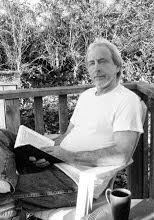
This Guy Debord stuff is mostly over my head. In fact, I simply enjoy basking in it more for the odd, daydreamy effect it has on me than for its intended intellectual impact and persuasion.
the text
A video:
Friday, August 31, 2012

Thursday, August 30, 2012
it's something else
Again last night I saw the lost country -- René Daumal
Entirely too much has been written about dreams, and I am not pleased. That stuff rings hollow. Just like consciousness per se, dreams have no explanation. They just are. Whatever they are, they are something else than what has been said about them.
[That's my opening salvo. I might have more to say here about the unsayable nature of dreams tomorrow or whenever.]
"August, Departing" -- a poem by Gillian Prew
Here’s the stain,
heaved out
and an orchard of clouds
sleeping. The crows flee
warm fugitives
on August’s blunt edge. I see
a distant coldness,
the skirt of the sun shirking.
The tide is loud with the drowned
and the windy chains of gulls.
The air smells of salty bone
and the womb forgetting.
By the rotting light I breathe,
counting the pretty darknesses.
heaved out
and an orchard of clouds
sleeping. The crows flee
warm fugitives
on August’s blunt edge. I see
a distant coldness,
the skirt of the sun shirking.
The tide is loud with the drowned
and the windy chains of gulls.
The air smells of salty bone
and the womb forgetting.
By the rotting light I breathe,
counting the pretty darknesses.
Copyright © Gillian Prew
I pasted her poem in without asking permission.
Here's Gillian's blog page for the poem: Gillian Prew.
* * *
Most mornings, I wake up and think I know what's what, when it comes to aesthetic stuff. I even think my opinions vibrate with some kind of unstoppable truth. That's basically ridiculous. Because other mornings I wake up and realize my opinions carry no more weight than anyone else's. After all, I'm no famous poet or whatnot. If a publisher ever accepted one of my poems, the laws of physics would most likely disintegrate, with volcanoes spewing a trillion poisonous and berserk frogs.
So in my more sober state of perception, I realize that my opinions about poems are merely expressions of how I relate to being in the world. No one else should care that much about what I have to say. If I'm convinced that poems should resonate with a spiritual and aesthetic kinship to poems by the masters, then that is just my isolated and peculiar opinion. Others will feel just as strongly about and give their allegiance to other poems, things that cause injury or illness to my soul.
* * *
Maybe a year or longer ago, I stumbled across a few poems by Prew. I was stopped in my tracks. Here was something unusual -- poems that are intellectually and emotionally coherent; poems that actually say something worth experiencing; poems that are written with a sensitive aesthetic touch. I can't quite verbalize the effect those poems had on me. I suppose it's like hearing a piece of music that has a deep, eccentric resonance with something in yourself, maybe like the echo of a half-forgotten dream.
* * *
August, Departing
The first thing that jumps out at me is the cadence and the way the line breaks contribute to the masterful rhythm. What a mystery it is how cadence can lend an implicit meaning to image, sentiment, and evocation! Then...
and an orchard of clouds
sleeping. The crows flee
Soon after the opening, we (or I) are smoothly transported to a moment of unusual vision and to the realm of aesthetic mood. It's amazing to me how phrases composed of simple words can, in the hands of a rare poet, effect in the reader an opening onto new space, a realm or moment of surreal texture woven into wan beauty.
a distant coldness,
the skirt of the sun shirking.
The season is changing. But the poet stands in the altering air with a perennial grief and a continuum of being. The word "departing" in the title is instructive. It carries over into the lines a coloration of and a clue to the hidden spirit of nature. How it is a great and latent coffin always opening to receive the departed and our cooling sense of normality (shadows deepening as time's parade of substance and wing becomes ever more funerary and strange). The image of the sun effectively reveals a quality of weariness behind the hysteria of physical law and phenomenal efflorescence.
The air smells of salty bone
and the womb forgetting.
Water is symbol and riddle, I think it's safe to say. And the sea, viewed or literary, can bring with its waves a tang of the future as well as an intuition about the nature of nostalgia. Is it "womb forgetting," with the womb having forgotten something, or is it a complex unitary phrase -- "womb-forgetting," as a lamentation about and toward the poet's (and our) primal amnesia?
The poem concludes in a condition of limbo, an equipoise in which one might consider the aesthetics of shadow and the exquisite tones of ennui.
By the way, "windy chain of gulls" is astonishing and brilliant.
Wednesday, August 29, 2012
René Daumal on carbon tetrachloride
Daumal (1908 - 1944) experimented with doses of this poisonous substance and then reflected on stuff:

For Daumal, the absurd consisted in the hysterical multiplicity of phenomena and the moribund of normality. Whereas the Absurd was conceived as the mind-blowing Absolute -- intrinsically not explainable, even to "itself." Yet a condition of being he tried to approach via chemicals, dreams, and poetry.
- You don't have to try this particular and rather exceptional experiment in order that your intuition of the absurd can attain the value of a metaphysical experience. But...the existence of persons and consciousness distinct from yourself, your own existence as an individual and finite creature, all that should, if you really wake up, appear to you intolerably absurd.
- Remember the day that you tore open the curtain and were taken alive, stuck in the uproar of uproars, in the wheel of wheels. And remember the days that followed, when you walked around like a cadaver bewitched, with the certitude of having been eaten by infinity, canceled and voided by the single existing Absurd.

For Daumal, the absurd consisted in the hysterical multiplicity of phenomena and the moribund of normality. Whereas the Absurd was conceived as the mind-blowing Absolute -- intrinsically not explainable, even to "itself." Yet a condition of being he tried to approach via chemicals, dreams, and poetry.
"I Will Go There" -- Gillian Prew poem
I Will Go There
I feel the words of this poem down in my still-mourning bones. This is the kind of thing poetry can do: layer an eccentric beauty into the surface of sadness, while also opening a space for breath and dark wonder.
I'm not being hyperbolic when I say that this is an important poem. Such an unusual thing to encounter. It's got staying power. Not only is it genuine and composed with aesthetic depth, but it's also coherent, which I consider a form of hospitality toward the reader. Simply put, this poem is really on another level.
I feel the words of this poem down in my still-mourning bones. This is the kind of thing poetry can do: layer an eccentric beauty into the surface of sadness, while also opening a space for breath and dark wonder.
I'm not being hyperbolic when I say that this is an important poem. Such an unusual thing to encounter. It's got staying power. Not only is it genuine and composed with aesthetic depth, but it's also coherent, which I consider a form of hospitality toward the reader. Simply put, this poem is really on another level.
kindred spirits
People have their own things going on and time is limited. So when I post a link to a long article, I don't expect anyone to actually read it. Pasting the link is just me being self-indulgent. Besides, W.G. Sebald is not for everyone, only for the clinically melancholy.
I'll just paste in a few things from the article:
I'll just paste in a few things from the article:
- It remains mysterious, how a book slowly amasses urgency and at the right moment pounces, finding one of its intended readers, who feels as though there are no others.
- Books that I notice because they confirm me; that extend a promise of futurity that I don’t think I could ever explain to anyone. Benjamin’s Illuminations, Joseph Brodsky’s Watermark, Roland Barthes’s Camera Lucida, some of the novels of Javier Marías, Nabokov’s Speak, Memory . . .
- All this, I kept thinking, from a book. But maybe not a book so much as a heard voice, a sensibility absorbed.
- When disparate things are brought together—as in a chemistry lab, as here—we allow for higher levels of the unforeseen. There would be, I knew, illuminations of specific historical moments, and insights into the lives of fascinating literary figures. But these did not fully account for my sense of compulsion. Rather, it was as if some powerful built-up need, the psychological equivalent, possibly, of a vitamin deficiency, had me looking for whatever could appease it. It could be that this need had somehow put me in the way of the chances and choices that brought the book to my mind. There was the unexpected trigger of the bookshelf photos, the flaring up of the impulse to find and read. Which, in turn, could only have happened because I had picked up inklings over time—in reading other books by Sebald, in those almost peripheral intimations, gathered during even the most casual inspections, that the tone and pace were somehow in sync with my reading disposition . . . I was confirmed in this quickly.
Tuesday, August 28, 2012
happy campers make me nervous
When I read books about philosophy or science, I'm struck by an undercurrent of tone that is complacent and too comfortable in those worlds. As if the attitude of the writers grew slowly into their brains like a large and happy fungus.
When I read books that are a bit more speculative in nature, I'm then struck by a tonality of credulousness that makes me wince.
Maybe the kind of perspective or attitude that would please me -- involving a mixed tone of stubborn equivocation and metaphysical paranoia -- doesn't exist in the authorial or academic world.
Maybe my desire for a different tone and approach is actually a symptom of my head beginning to dissolve or becoming unstable in space-time.
When I read books that are a bit more speculative in nature, I'm then struck by a tonality of credulousness that makes me wince.
Maybe the kind of perspective or attitude that would please me -- involving a mixed tone of stubborn equivocation and metaphysical paranoia -- doesn't exist in the authorial or academic world.
Maybe my desire for a different tone and approach is actually a symptom of my head beginning to dissolve or becoming unstable in space-time.
Subscribe to:
Posts (Atom)