Saturday, July 25, 2009

some of my father's memories

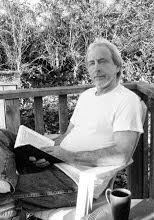
[Excerpts from my father's "Memoirs," which I persuaded him to write a few years before he died in 2007.]


During my nine years at Wesson, Arkansas, I was involved in several romantic experiences, including those with Helen Johnson when I was in the first grade and later with Melfa Telford at the age of ten. I was so in love with Helen that I got into a fight over her during recess on my first day in school. It was with "Stinky" Davis, a third grader, and he proceeded to knock me down a few times and, in the process, knocked my glasses off. When school was out that afternoon, I followed his little brother, who was my age and size, home from school and attacked him in the middle of the road in front of his house. This time I was victorious, and his mother had to pull me off of him.


When we moved from Wesson to Urbana, Arkansas in 1932, I was quite saddened because I was leaving my girl friend Melfa Telford. After we had completed our move, I received a letter from Melfa with a piece of double-bubble gum inside. So, I knew that she was really missing me.


My daddy was a very special person. He had a sense of empathy with black people and always treated them with respect. I can remember walking on the sidewalks in El Dorado and seeing Daddy step off the sidewalk to greet and shake hands with black people, whom were not allowed on the sidewalks. Shaking hands with a black person was unheard of back then. I also remember many times that he gave black people money, when I knew we were barely getting by. This was during the days of segregated schools and churches, and Daddy spoke many times at black high school graduations and spoke quite often at black churches. When he became Sheriff of Union County in the early fifties, he hired a black deputy which made him very unpopular and was probably the reason that he only served one term as Sheriff. I was quite touched during his funeral service at Second Baptist Church, to see many black people in attendance. This fact alone tells you a lot about my daddy's character, because black people did not attend white people's funerals back then.


………….


In recalling my early teenage years at El Dorado, I remember my association with Lefty Frizzell, who in the '50s became a superstar country singer and song writer. I was about 15 years of age when Lefty and his family moved to El Dorado, renting a shack near where Dale Gray [Dad's best friend – Tim] lived on South Jackson Street. Lefty was quite young then, perhaps 10 or 11, and accompanied by his many younger brothers and sisters, he followed Dale and me everywhere we went on the South side of El Dorado. Their daddy worked in the oilfields but apparently made little money because the children were dressed very poorly. The South side of El Dorado was a tough area to grow up in, and fighting was the main pastime. Lefty seemed to love fighting, particularly when he and his siblings were made fun of. He was also very good at it and used his left like a windmill. As I recall, Dale and I named him Lefty, and this nickname stuck with him the rest of his life. He later fought in the ring as a professional.


Lefty loved country music – especially Jimmie Rodger's songs – during the time that Dale and I knew him. He talked his mother into trading their milk cow to Dale's mother for an old wind up record played and several Jimmie Rodgers records. This was the beginning of Lefty's music career as he spent many hours playing Jimmie's records and trying to emulate him.


After about two years of living in El Dorado, Lefty's family moved to the Texas oilfields, and he later started singing in night clubs in Texas and boxing. I lost touch with him until after I came back to El Dorado after college and heard some of his music and songs on the radio. I still love his songs and play them often. My son Mike wrote a song titled "Daddy Knew Lefty" in April 1992 and recorded it on cassette tape. I am very proud of this tape, and it tells the true story of my time with Lefty.


a sign in the sky -- good augury

I just went for a little five-mile drive out in the country. Needed to get out this morning and shake the nonsense out of my head...at least temporarily. The morning sky was oddly bright, considering the almost complete blanketing of clouds.

Up yonder to my right...up in the sky...a sparrow was chasing a full-fledged HAWK! It was trailing the raptor about 15 yards behind. It looked like an ME-109 fighter closing in for the kill on a B-17 bomber.

But this is what it really looked like to me:

the Little Guy finally about to give some holy hell to the Political-Military-Industrial-Media Quadplex...an avian St. George on a sword of air coming to slay the four-headed Dragon.


When I got home, I sat down on my haunches in the gravel driveway, sipping coffee from my plastic travel cup and polishing off a smoke. My nutty dog ran fast, absurd circles round and round me. As if weaving an invisible web of agreement that omens are not always bad.

Thursday, July 23, 2009

One Arrow, One Life


[The following essay was written by my daughter Sarah four years ago, as a college sophomore. It was a book review assignment in her Asian Philosophy & Religion class. I thought she did a good job, and I found the topic to be interesting. Maybe you will, too.]


The arrow of experience–a fluid succession of “nows”–should be notched on the bow of discipline and aimed at the target of one’s own heart and mind. Such is a distillation of the themes expressed in Kenneth Kushner’s book One Arrow, One Life: Zen, Archery, Enlightenment. Kushner, holding a PhD in clinical psychology, is a member of the educational staff of the Institute of Zen Studies in Honolulu. His book describes various experiences he had in Hawaii and in Japan while studying kyundo–the art of Zen archery. In addition to merely educating the reader about technical aspects of oriental archery that differ from the Western form, Kushner’s project is to impart the profound spiritual value that lies at the heart of this practice that might affect our daily lives.

My first reaction to the early chapters was a slightly negative one: there seemed to be something almost neurotic about this psychologist’s obsession with martial arts in general and kyundo in particular. That is until I reached page 40, which contained a photo of master Suhara Koun Osho drawing his bow. Master Osho’s poised image communicates something visceral yet calm, overriding my tendency to search for cosmic meaning. It seems that any activity done with deep seriousness will layer in a new, positive dimension to how we experience reality. Having finished reading Kushner’s book, the tables have decisively turned: his search for Zen truth in archery no longer seems neurotic, and my own interest in television and movies now appears to be darkened by the shadow of something more solid and real.

One Arrow, One Life, part biography and part explication, deals mainly with Kushner’s time spent at the kyundo training center Chozen-Ji (Hawaii). His encounters with the resident master, Tanouye Roshi, enriches his dry description of training principles with personal anecdote. As readers, we accompany the author while he learns to mesh the technical aspects of archery with the subtler spiritual aspects of Zen. The early chapters expose us to the ritual (“sharei”) of shooting an arrow, as well as how the individual mechanical steps are infused with psychological and physiological energies. Special emphasis on proper breathing, posture, and thoughtless concentration (this triad is referred to as “mushin”) combine to differentiate kyundo from ordinary Western archery. The middle chapters move from an explicit focus on archery to the more general aspects of Zen spirituality, such as breathing control and maintaining awareness against delusions, and how they might inform day-to-day existence. Finally, the book delves into finding and maintaining oneself in the universal “creases” of nature, entering the flow of deep energy that puts us into harmony with all of life.

“One arrow, one life” is a phrase the author chose to emphasize that each action in life should be done as if that active moment encompasses the extent of one’s life. “The saying conjures the image of the last act of a dying man” (42). This approach of seriousness carries over into the art of Zen archery and is embodied in the formalized procedure called “hassetsu,” the ritual eight steps of kyundo. Here, various postures and bow manipulations come together with breathing control to allow for the released arrow to follow its Zen trajectory. The most difficult part of the process has to do with the art of the release. Having properly channeled one’s breathing from the “hara” center below the navel, as well as completed the body-cross of opposing left and right arms, the moment of proper Zen release occurs on its own when breath and tension reach their peak. The arrow releases itself, rather than the hand letting go.

The author struggled to achieve such a state or ability, and it appears that this involves tapping into the hidden energies and “will” of being. To me, this idea conjures up the idea and importance of intuition and gut instinct–calming the mind and body in order to become receptive to the universal “now.” Another interesting kyundo principle is “zanshin,” which “means that the state of mind and body used in executing an action is not dissipated by it, but is carried over into the next activity” (73). This notion of combined equipoise and carryover allows one to accept an outcome and move ahead into the next opportunity. It also is a principle of concentration, wherein one is enabled, whether in archery or in conversation with another person, remain awake and focused with seriousness from one flowing moment to another.

A striking aspect of this book is the cultural dislocation the author experiences when confronting the Japanese psyche, as manifested by various Zen instructors. It’s like an alien encounter, an otherworldly contact with beings whose mental fibers are rooted to apparently deeper and richer spiritual soil. In Chapter 5–“The Naturally Correct Way”–Kushner describes the day he and others were at work on the grounds at Chozen-Ji clearing boulders to make space for future construction. The author struggled to relocate some large boulders by rolling them until Tanouye Roshi explained to him, “You have to learn to push the rock where it wants to go” (62). One must follow the natural grain or crease in any endeavor. By discovering the natural planes on a boulder’s surface, one might roll the rock in agreement with them. In archery, one learns to align the grain of one’s being with the universal orientation of nature. One must conform the “ji”–technique–with the “ri”–underlying universal principles. “Ri is formless and unchanging. Ri is ineffable” (15).

As the reader moves into and through these interesting anecdotes and information, there is also a downside: Kushner’s prose is, for the most part, stiff and dry. A certain monotony sets in, with too little variation in sentence structure. A bit more eloquence would have made for a richer reading experience and been more fitting for the exotic subject matter (a better editing job to catch typos would also have benefitted the book). Despite this drawback and whether or not one might be interested in kyundo, this book has its strong points. As mentioned earlier, the photo of Suhara Koun Osho drawing his bow (reproduced below) provides a visual confrontation with spiritual depth.

For the most part, we Westerners stumble through our psychic lives, jostled by one association after another. Rarely in daily living do our physical or mental movements glide according to the deep rhythms of nature. Master Osho’s serene, celestial countenance, on the other hand, suggests there might be another “do.” As Kushner remarks, “Do is an important word in Zen. It is the Japanese translation of the Chinese word, ‘Tao.’ ‘Do’ is usually translated as ‘Way’” (5). One begins to wonder if an absorption with television shows and movies might be the wrong kind of “do”.

One Arrow, One Life not only introduces the kyundo aspirant to basic methods and principles, it offers the general reader an alternative lens through which to view reality. Even if one chooses not to become a Zen archer, one takes away from the book a subconscious enrichment: when caught up in life’s stresses, there will now be the sense that a saner version of living is possible. Coming to this book with no interest in archery, I was prepared to be a bit bored and unaffected. Now having realized certain undercurrents moving below the overt theme, I acknowledge their importance and recommend this book to other Westerners needing a breath of fresh Zen air.


.......................................
One Arrow, One Life: Zen, Archery, Enlightenment
Kenneth Kushner, Tuttle Publishing, 2000, North Clarendon, Vt.

“Who made God, Daddy? Who made God, Mommy?”

I will not strain your credulity by trying to write something sophisticated. On the flip-side of that token, I hope you will set aside any knee-jerk religious conviction or fuzzy-skulled mysticism while reading this.

The child's question is everything. We gather around us a lifetime of buffering nonsense to keep her question from touching us in the deep places. It is too disconcerting to really address it and think into it. Or we've become so mature, that such a query is met with condescension.

Well, Meister Eckhardt drove his mind all the way into it. And came up with an “answer” that some would find the raving of an imbecile. God requires a foundational Godhead...then the Godhead requires something beyond even it...something finally ineffable.

The question is everything. It is a serious matter. The child is waiting.

…..............................

I used to be, and still sometimes am, over-stimulated when reading or hearing about the death of a child or young person. Someone cut off, cheated out of years and experience. There's a scene in Thomas Mann's The Magic Mountain, in which Hans Castorp overhears the tragic wailing and rebellion of a tubercular girl on the eve of death. That really stuck to me.

I used to think that old people dying was not such a tragedy. They've lived a long life. They had their share of experience. Now, I'm not so sure. I'm beginning to think that a life spent wrapped up with religion or some mysticism...or as an above-it-all atheist...or in some other “mature” kind of buffer zone...well, I suspect that the Reaper's close breath just might be more horrible on their faces than on the cheated child.

Here's why: the child or young person is closer to the vacuum of non-being; the elder is much farther removed. If there is a God – something that explains Being – then the child has more lately flown from that mysterious Weaver; the awesome, sublime dew of life's morning still beads on her fair soul. The old are too far flung in time, thus tragically forgetful...grown too solid to be bothered with such ephemeral questions as “Who made God?”

On the deathbeds of ancients, I suspect the trauma is tenfold that of the young. Now...Now...Now...the question looms as agony instead of curiosity. But what does it matter you might ask, if there is no answer? Well, I further suspect that a life, short or long, spent in conscious awareness of, in constant tension about the question of who made God would be a life that is less anguished over pending extinction. Less shocked and surprised to discover that there actually is a Mystery.


Wednesday, July 22, 2009

the hot dog joint

[Here's another dream, from 30 years ago. I occasionally remember it and wonder about it. ]


I was driving between Little Rock and El Dorado, Arkansas, with my first wife. Somewhere near Fordyce, I spotted a food joint way off the road on the right -- out in the middle of nowhere. It was kind of like a forlorn Dairy Queen. We were hungry, so I took the sloping gravel path. And down to where the little building was surrounded by trees and picnic tables. As I got out of the car and walked up to the order window, my first wife conveniently disappeared.

I gave my order for hot dogs (hot dogs were all they offered). I felt a large presence standing behind me. It was a large presence: a man wearing black-rimmed glasses and with a crew-cut above his 400 pounds. He ordered his own hot dogs. While we stood there waiting, we began to casually chat. Moments later, two overweight black ladies sashayed past us. I'd say they each weighed about 271 or 273...in that spectrum. My new friend lowered his head toward me, gently elbowing me in the ribs, and whispered in a mocking tone, "Get a load of them."

We got our hot dogs and walked together toward one of the picnic tables. The only one close that was available still had some trash and uneaten portions on it from previous guests. And actual dogs. With hind legs on the benches and front legs on the table top, two mangy dogs were scruffling down the leftovers. They were fairly large, like a cross between German shepherds and coyotes. This pissed me off.

I rushed to the table and "shoo'd" them as persuasively as I could...with uncharacteristic authority and determination. This pissed them off. One especially. As I came up to him (I assume), he glanced up at me side-wise, snarling, and baring his teeth, which were still buried in hot dog remnants. I "shoo'd" him again, louder. He continued eying me with contempt and from the periphery. Then -- and I kid you not -- he said in low, broken tones: "You. Son. Of. A. Bitch."

For a few moments, things were in state of high uncertainty. Then, he and his mangy buddy reluctantly withdrew from the table, heading off to god knows where. After that bit of excitement, things got vague. Probably a thousand other events transpired, but I can't remember.

The Art of Conversation

[The following essay was first published in the online language journal The Vocabula Review, edited by Robert Hartwell Fiske. Then in 2004, my essay was included in the anthology Vocabula Bound: Outbursts, Insights, Explanations, and Oddities, published by Marion Street Press (re-published 2008, as a Kindle edition). Reading my essay recently, I realize the ideal, unreal quality of it. I especially realize how far short I fall in living up to my own standards, regarding thoughtful conversation (witness the unbridled goofiness and nonsense in my words to others on Facebook). I suppose, then, this little manifesto is intended, as I mention below, to be only a candle that glows "softly in the back of the mind."]


I speak, therefore I am, even when my words echo silently in the cavern of consciousness. But when you speak, do I grant you the equal measure of existence? Our relations to one another are necessarily strung on the filament of language. I wonder: do we realize how fragile this thread of communal existence is? How a lack of conscious maintenance causes that cord to continually fray? This essay is about our speaking and about our listening. It is about the art of conversation.


There are various ways of defining conversation. For my purpose, I will approach it from five directions: idle talk, casual speech, verbal tyranny, data exchange, genuine dialogue.


Idle talk functions to fill up the vacuum-pockets of boredom, and in this respect, it usually flows freely, undisciplined by conscious rules of engagement. Actually, "flows" is an inaccurate term to describe this movement of words; "ricochets" is better. The initial utterance of an idle topic is like a bullet sent thoughtlessly toward a vague target, sparking random associations among the speakers until momentum fails and the topic falls impotently to a ground of indifference. Such banal "conversations" preclude a meeting of minds. We become babblers, with no one really listening to anyone else. Although the din of speech may swell to a cacophony of reportage, we are left unenriched by the experience. Worse, gossip is prone to occur in this dead-zone of unbridled chitchat. If it is only human to extemporize on the foolishness or misfortune of others, it is still a human failing that should be struggled against. Idle talk is a waste of consciousness and a waste of time. It makes of life something shallow and trivial, instead of deep and significant. It is not real conversation. It is, rather, the withering of the flower of humanness, which is language.


Casual speech is a less offensive sibling of idle talk; therefore, we may be more lenient in our appraisal. It bears the family resemblance of informality but differs from idle talk in one important respect: it is not the venting of stale fumes from unreflecting minds; rather, it represents an act of surreptitious appreciation. The themes of casual speech may, like idle talk, remain on a trivial, even coarse, plane, but these themes are substantially irrelevant to the nonverbal reason for the conversation — the oblique probing of another psyche. Indeed, this casual give-and-take is a process of valuation. Ezra Pound's "Tame Cat"1 is illustrative of this:


"It rests me to be among beautiful women.
Why should one always lie about such matters?
I repeat:
It rests me to converse with beautiful women
Even though we talk nothing but nonsense,

The purring of the invisible antennae
Is both stimulating and delightful."


Verbal tyranny is a pronounced form of anti-conversation. Here, genuine dialogue is not simply the victim of entropy and deflation, effected passively by idle chatter. No, here the ramparts are stormed in a zealous crusading for a singular point of view and a consequent seizure of available time for the righteous campaign. A definite topic will be brought up, but it will not be brokered in the idea market of free and equal discourse. It is here to make a point: that the topic holder must be heard and heard exhaustively. This person is not interested in hearing another point of view. His is the only worthy one. And this is verbal tyranny. Verbal oppression. The rules of respectful engagement have been dispensed with in a fury of monomaniacal theme-staking and point-making. Verbal tyranny is most on exhibit when the discussion is about religion, politics, or some topic equally incendiary. As the tyrant conquers more and more conversational territory, the other, far from being persuaded, is likely to formulate a plan of escape from the insatiable Torquemada or intransigent Stalin. It is incumbent on those with strong convictions (not a sin, in itself) to restrain a militant certitude so that understanding becomes possible. If you are overwhelmed with enthusiasm for your belief or opinion, take a moment to reflect on how psychologically suspect and statistically capricious it is that you, and not the other, are privileged with unshakable truth.


Interruption is a particularly noxious gas in the arsenal of verbal tyranny. How many times have you attempted to proffer a topic of supposed interest, only to have it asphyxiated as soon as it begins to leave your lips? You've certainly had no time to complete your thought, and you stand there dumbfounded and helpless as your subject expires in the ego-charged air.


Data exchange is a necessary but unremarkable type of conversation. It's a neutral category, consisting in the mere relay of information. The routines of the workplace function through its operation, and this exchange of messages is about getting things done, not about conversing. There is little to praise or vilify about data exchange, other than to lament its use as a substitute when there is opportunity for more meaningful conversation. Its incursion into home life may become habitual and unconscious to the point that the family milieu comes to resemble the operation of a computer. Merely processing "bits," a computer does not reflect on their quality. Yes, there is practical messaging to be done and news to share, but like idle talk, data exchange can lead to a dulling of the ear, where no datum has more significance than another. We are then liable to pass one another by on this word-stream of colloquial mediocrity. Vigilance is required for maintaining — through heightened and deepened speech acts — the realness, the rooted-in-presentness of each family member.


Genuine dialogue is a living, moving complex of matter and energy. Words are the cells that build the tissue of our talking, while awareness is the catalytic spark. As in a potent alchemy, our conversations should be crucibles for making something. They should be conspiratorial efforts to make time real — to mutually re-cognize (bring afresh to mind) the uncanniness of existence. Thus, it is crucial that our syntax be supple, our vocabulary conditioned for acts of creation. How wearisome and irksome it is listening to opinions expressed without flair or wit (a sign of awareness). Presence of mind amid the clamor of external stimuli is how I would describe awareness, but achieving and maintaining it are not easy assignments. We lack the mystical talent and control of an Indian rishi, so we must look for a shortcut. I submit a counterintuitive course: humility. Turning away from self and toward the other, the humble person might paradoxically become a vessel for a special type of awareness in which a real conversation may catalyze.


John Keats spoke of "negative capability" — an imaginative sympathy — and it gave him a profound insight into the nature of his subject. With the semantic tension quivering between the two poles, "negative" and "capability," I will borrow Keats's phrase and blend it into my suggestion for dialogical humility. The concept can then be understood as a becoming aware of oneself through verbal transaction with another. Through the "force" of humility, attention will be directed outward and focused on the one who is speaking. Such a focus will empower an identification, therefore a mirroring back onto self-consciousness. With awareness comes a "deceleration" of time, allowing unusual moments of shared presence.


A viable colloquy grows out of respectfulness and fair play, two elements in the practice of humility. To converse in this manner means that you acknowledge in principle your interlocutor as being on an equal ideational footing. If you cannot abstractly submit to this condition, and at least play along, then you should not join the conversation. Otherwise, your contribution will actually be usurpation, which is the manner of a tyrant.


If our purpose is to consider conversations as artworks, it would be proper to have a working definition of art. Broadly construed, it is the organized expression of inspired thoughts and feelings. The art of conversation, therefore, involves an organum for structuring an aroused theme. What would be the main precept of such an organum? To paraphrase Samuel Taylor Coleridge, our words should encompass and retrieve the whole of our thought, instead of proceeding verbatim from their spontaneous, haphazard mental occurrence (but this whole-of-our-thought must reach an appropriate terminus: Coleridge was prolix in his own conversing, apparently something of a verbal tyrant). Our sentences should be holistic, not pointillistic, and with practice, a talent for this kind of speaking will emerge, resulting in natural expressions endowed with composure. Of course, the creation of such verbal art will require the devotion of more than one to the project. In genuine discourse, reciprocal dynamics generate a feedback loop of existential grounding and edification. This collaborative effort, like an improvised performance of music, moves rhythmically toward a coda and then fades into the province of memory.


Some other principles of engagement that go into the making of a good conversationalist are as follows:


1. Be relatively certain that the topic you wish to broach is one that the other person would be interested in.


2. Listen closely, calmly, and thoughtfully to what the other person has to say before responding. You might consider briefly restating the other person's idea in your own words to show that you have really understood what was said before attacking or embellishing.


3. Be alert to the fair-play requirement that the discussion time must be equally divided. Flooding the sound-space with an excess of one's own opinions and interests is to be crass and boorish.


4. Keep the original topic in mind. This suggestion is important for respecting the person who began the conversation, but it is a flexible one. After all, a stimulating conversation is one in which a leavening takes place — a lifting into higher levels of consideration, an infusion of vivifying subthemes.


5. Avoid the stultifying effect of clichés. They rob your speech of vigor and authenticity. Let these threadbare hand-me-downs decompose completely from your closet of phrases. The best method for invigorating one's vocabulary and broadening one's conversational range is to read books (preferably, well-written, provocative ones).


6. If you are unable to abide by principles 1 through 5, then please resist the urge to speak. Use this new quiet time to try and understand why you are so conversationally challenged and uncharitable.


Although these principles are important, they are not intended as rigid procedures. Imagine the folly of trying to converse while constantly accessing a mental list of rules. Speech would be a halting, disjointed affair. Rather, these criteria are offered as candles to glow softly in the back of the mind.


With the foregoing in place, the question may then occur: what is the substance of an edifying conversation? What should we talk about? I have dealt harshly with idle talk, equivocally with casual speech, proscriptively with verbal tyranny, and indifferently with data exchange. Is the subject matter that arises from these usual categories necessarily inferior? Must all real conversations be about deep things like art, literature, philosophy, and science? I don't think so. Whether the topic is sports, shopping, entertainment, or even the weather, the manner of conversing will, I propose, "consecrate" the subject of a dialogue, leading to the possibility of communion and a heightening of a sense of actuality.


In conclusion, the art of conversation is the art of being human. It is the art of valuing and verbally embracing another. Language is haunted with a fragrance of transcendence. We can speak (therefore think) the infinite and the eternal. Our words are acts of spirituality that sprinkle a residue of mystery on a seemingly mundane earth. Converse with genuineness in the attempt to uncover something sacred not only in your correspondent but in yourself.


..............

Note:


1. Ezra Pound, Selected Poems of Ezra Pound, A New Directions Paperbook (New York, 1957), p. 37.


Vocabula Review


looking at a painting by Corot

They are dancing in the pale sunlight,

having arisen from black dreams of the fatherland,

dreams too dark for spirits.

They dance in the dawn fog as

great trees hover like providence,

watchful, rooted, spreading.

They dance a wild waltz of morning as

dew drips like wanton tears

from the grave grass.

They dance to a rhythm sprung

fresh in springtime, turning, spinning,

gliding in cool sunlight,

forgetting...


cold concrete walls and hard faces

near a sepulchral door, where

the shocked air chills as they pass;

soon the gas in the horror in the black

makes of them a floor of corpses,

a soft spread of death...


but now they are dancing

in the purgatory of a painting

that I might, in cosmic grief,

tear my garments

and cover my head with ashes

and gnash my teeth

for these, my lost nymphs.